Bitcoin Halving
What is Bitcoin Halving?
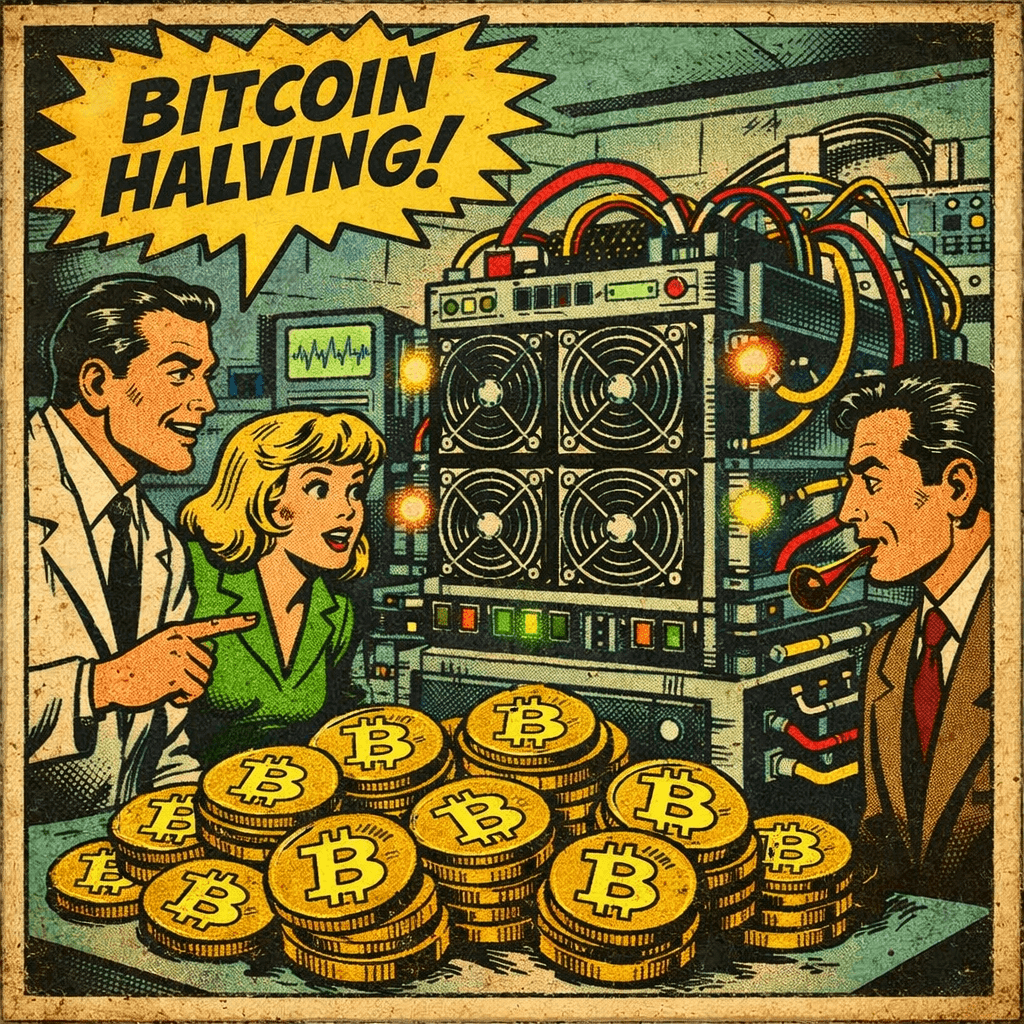
Bitcoin Halving is a programmed event in the Bitcoin network where the reward for miners for discovering a new block is cut in half, thereby slowing down the issuance of new coins.
This is a fundamental mechanism, embedded by Satoshi Nakamoto, to control inflation and maintain the scarcity of digital gold. Halving occurs approximately every four years, or after every 210,000 blocks are mined. Its primary goal is to mimic the scarcity of precious metals, such as gold, which is intended to contribute to the long-term growth in Bitcoin’s value. Thus, this event holds immense significance for the entire cryptocurrency market, impacting miners, investors, and the overall dynamics of supply and demand.
Mechanism and Technical Essence of Halving
Technically, halving is a change in Bitcoin’s code that is automatically activated upon reaching a specific block number. Initially, the block reward was 50 BTC. After the first halving, it decreased to 25 BTC, then to 12.5 BTC, and currently stands at 6.25 BTC. This process will continue until the last bitcoin is mined, which is estimated to occur around 2140. The halving mechanism ensures predictable issuance. It also guarantees that the total number of bitcoins will never exceed 21 million. This is a key aspect distinguishing Bitcoin from fiat currencies.
Impact of Reward Reduction on Miners and the Network
The reduction in block reward directly affects miners. After a halving, their income from mining new coins is cut in half. This can lead to less efficient miners leaving the network. Consequently, there is a decrease in hashrate and network difficulty. However, the market typically adapts. Bitcoin’s price often rises after a halving. This compensates for miners’ losses. Thus, halving stimulates technological development in mining. It also promotes increased energy efficiency of equipment.
Historical Cycles and Bitcoin Price Dynamics
Historically, each halving has preceded a significant increase in Bitcoin’s price. While this does not guarantee future results, it creates certain expectations. After the first halving in 2012, BTC’s price rose from $12 to over $1000. The second halving in 2016 led to a rise from $650 to nearly $20,000. The third halving in 2020 was also followed by a bull cycle. The price reached new all-time highs. These cycles demonstrate how scarcity influences demand.
Why Halving is Important for Long-Term Investors
For long-term investors, halving is a key event. It confirms Bitcoin’s deflationary nature. This distinguishes it from traditional assets. A reduction in supply with constant or growing demand creates potential for value appreciation. Investors view Bitcoin as a store of value. They also see it as a hedge against inflation. Thus, halving strengthens BTC’s investment appeal. It contributes to the formation of a long-term strategy
The Role of Scarcity in Shaping the Value of Digital Gold
Scarcity plays a central role in shaping the value of Bitcoin, often referred to as “digital gold.” The limited supply of 21 million coins, reinforced by halving, creates a unique economic model. Unlike fiat currencies, which can be printed in unlimited quantities, Bitcoin has a strictly defined limit. This artificial scarcity, controlled by an algorithm, is one of the main factors supporting its value. Consequently, each halving intensifies this scarcity.
Forecasts and Expectations from Future Emission Reduction Stages
Future halvings will continue to impact the cryptocurrency market. Experts and analysts make various forecasts. Many expect the continuation of bull cycles after each reward reduction. However, the market is becoming more mature. The impact of halving may change. It is important to consider not only scarcity but also other factors. These include institutional adoption, regulation, and technological innovations. Thus, each new halving is a test of strength for Bitcoin.
In conclusion, Bitcoin Halving is a programmed event that halves the reward for miners, slowing down the issuance of new coins and enhancing the scarcity of digital gold. Understanding its mechanism, its impact on miners and the network, as well as the historical price dynamics of Bitcoin after halving, is fundamental for long-term investors. This event reinforces BTC’s deflationary nature, highlighting its value as a store of value and a hedge against inflation in the ever-changing cryptocurrency market.