Altcoin
What is an Altcoin?
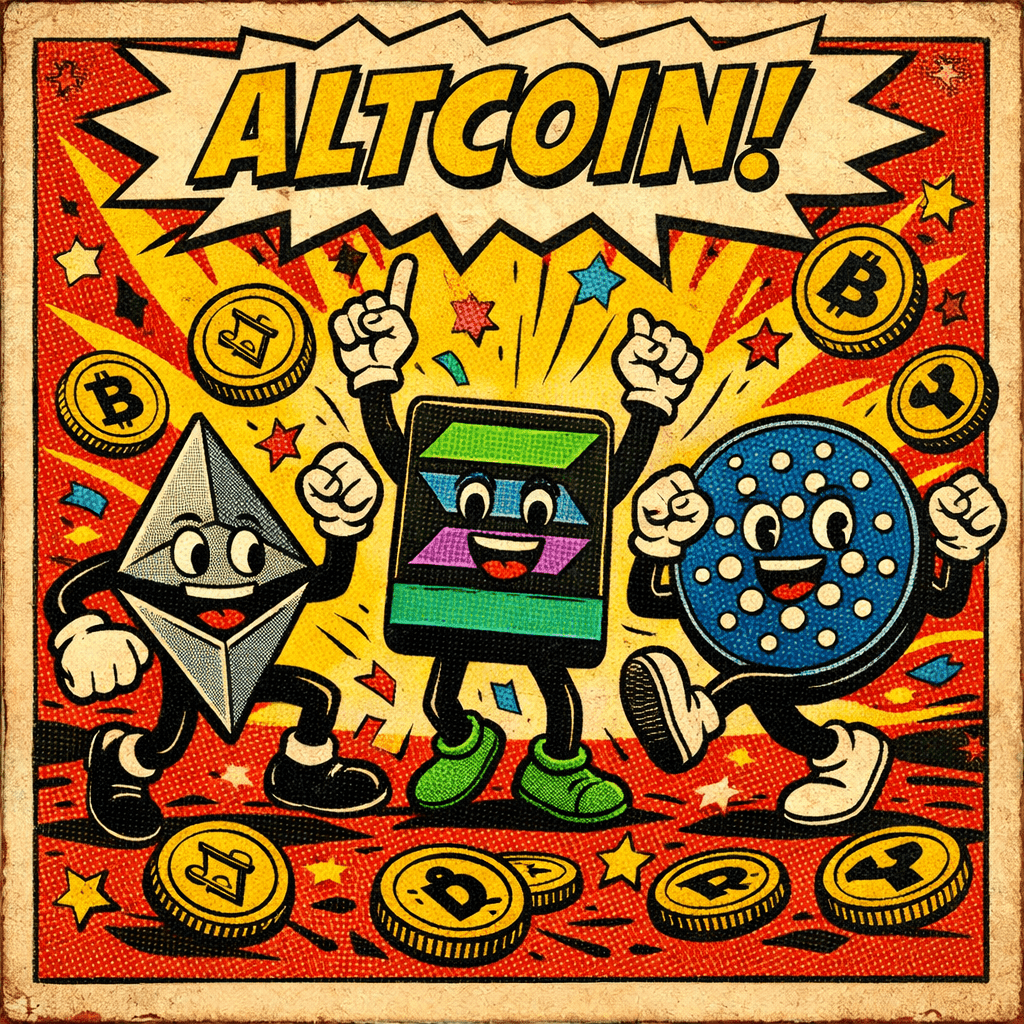
An altcoin is any cryptocurrency created as an alternative to Bitcoin, utilizing blockchain technology to offer new features, improve scalability, or solve specific tasks in the digital economy.
History of emergence and evolution of alternative coins
First of all, it is worth noting that the term “altcoin” originated in the early years of the crypto industry. At that time, Bitcoin was the only significant asset on the market. However, developers quickly realized that the first cryptocurrency had its limitations. For example, low transaction speeds and limited programmability became the stimulus for creating new projects. Consequently, Namecoin appeared in 2011, becoming the first official altcoin in history. It offered a decentralized domain name system, which was an innovative step. Thus, the era of rapid development of alternative digital assets began.
Subsequently, the market began to expand rapidly. Projects like Litecoin emerged, offering faster blocks and a new mining algorithm. Certainly, each new project sought to occupy its unique niche. As a result, today we see thousands of different coins, each with its own philosophy and technical base. It is important to understand that the evolution of altcoins does not stop for a minute. New protocols are constantly appearing, making transactions even cheaper and faster. Consequently, the modern investor must closely follow all changes in this dynamic environment.
Main types of altcoins and their classification
Stablecoins as a tool for stability
Today, stablecoins play a critically important role in the cryptocurrency ecosystem. As a rule, their value is pegged to fiat currencies such as the US dollar or the euro. This allows users to preserve capital during periods of high market volatility. In addition, stablecoins provide a convenient bridge between traditional finance and the world of blockchain. In particular, assets like USDT or USDC have become the standard for settlements on exchanges. Thus, they provide the necessary liquidity for the entire industry. Certainly, the reliability of a stablecoin directly depends on the transparency of its reserves.
Utility tokens and their role in ecosystems
In turn, utility tokens are designed to provide access to specific services within a particular platform. For example, they can be used to pay fees, participate in voting, or receive discounts. Often, such tokens are issued during initial coin offerings (ICOs). It is important to note that their value directly correlates with the popularity and development of the project itself. Consequently, if the platform becomes in demand, the demand for its internal token inevitably grows. As a result, investors get the opportunity to profit from the growth of a promising startup. However, it is worth remembering the risks associated with the implementation of the project’s roadmap.
Governance tokens and decentralized management (DAO)
Modern decentralized autonomous organizations (DAOs) actively use governance tokens to make key decisions. In particular, owners of such assets can vote for changes in the protocol or budget allocation. This creates a unique system of collective ownership and management. As a rule, the more tokens a user has, the higher their influence on the future of the project. Thus, the community gets real control over the development of technology. Certainly, such an approach contributes to increased transparency and trust. Ultimately, governance tokens become the foundation for a new digital democracy.
Meme coins: from joke to market phenomenon
One cannot ignore such a market segment as meme coins. Initially, many of them were created as a joke or a social experiment. However, thanks to strong community support and viral marketing, some of them have reached huge capitalizations. For example, Dogecoin has become a true symbol of this category of assets. It is important to understand that investing in such coins carries extremely high risks. Often, their price depends solely on hype in social networks. Consequently, beginners should exercise maximum caution when working with such instruments. Nevertheless, meme coins continue to attract the attention of millions of people around the world.
Technological differences and innovations
Consensus algorithms: Proof of Work vs. Proof of Stake
One of the main characteristics of any altcoin is the consensus algorithm used. Traditional mining based on Proof of Work requires huge computing power and energy consumption. In contrast, modern staking in Proof of Stake networks allows for confirming transactions through coin ownership. This makes the network more environmentally friendly and scalable. For example, Ethereum’s transition to the PoS model was a major event for the entire industry. As a result, transaction processing speeds increased significantly, and fees decreased. Thus, technological progress makes blockchain more accessible for mass use.
Smart contracts and decentralized applications (dApps)
Certainly, the emergence of smart contracts was a real revolution in the world of finance. These self-executing algorithms allow for complex transactions without intermediaries. Decentralized applications (dApps) are built on this technology, covering various areas from lending to gaming. As a rule, altcoins that support smart contracts have a much higher intrinsic value. In particular, they become a platform for creating new tokens and services. Consequently, such projects form entire ecosystems that compete with traditional banks. Ultimately, this leads to a global transformation of the financial sector.
Benefits of investing in alternative assets
Many investors choose altcoins because of their potential for explosive growth. Unlike Bitcoin, which already has a huge capitalization, new projects can grow tens and hundreds of times. In addition, including various coins in an investment portfolio allows for effective risk diversification. Often, different market segments behave differently depending on the news background. For example, when major currencies fall, some utility tokens may show growth. Thus, proper distribution of funds helps protect capital from sharp drawdowns. Certainly, this requires a deep analysis of each selected asset.
Risks and volatility in the cryptocurrency market
It is important to always remember that high returns are inevitably accompanied by corresponding risks. Volatility in the altcoin market can be simply extreme. The price of a coin can drop by 90% in just a few days. In addition, the industry still suffers from the actions of scammers and hacker attacks. Often, new projects turn out to be ordinary Ponzi schemes. Consequently, wallet security and checking the team’s reputation should be a priority for any contributor. Also, do not forget about regulatory challenges. Governments in many countries are constantly changing the rules of the game, which can negatively affect the value of assets. Thus, caution is the key to longevity in the crypto world.
How to choose a promising altcoin for investment
To find a truly high-quality project, it is necessary to conduct comprehensive research. First of all, it is worth studying the roadmap and understanding what tasks the team plans to solve. It is important that the project has real utility and demand in the market. It is also critically important to analyze tokenomics: how coins are distributed and what their total emission is. Often, excessive supply can hold back price growth in the future. In addition, the presence of well-known partners and an active community is a good signal. As a result of this approach, the chances of a successful investment increase significantly. Certainly, even the most thorough analysis does not guarantee profit, but it minimizes the probability of error.
The future of altcoins in the global financial system
In the long term, altcoins could become an integral part of the global economy. We are already seeing how large corporations are beginning to integrate blockchain into their business processes. The Web3 concept involves creating a next-generation internet where users will fully own their data. In this system, tokens will serve as a universal means of payment and identification tool. Thus, the boundaries between the digital and real worlds will gradually blur. Certainly, there are still many obstacles on this path, but the direction of development is obvious. Consequently, those who start studying this field today will gain a significant advantage in the future.
Additionally, it is worth considering the impact of institutional investors on the alternative coin market. In recent years, we have observed how large funds and banks are beginning to show interest not only in Bitcoin but also in leading altcoins. This brings additional liquidity to the market and contributes to reduced volatility in the long term. However, the arrival of large players also means increased control and regulation. Consequently, the market is becoming more mature and predictable, attracting conservative participants. Thus, integration with traditional finance opens new horizons for the development of the entire industry.
It is also important to mention the role of decentralized exchanges (DEX) in altcoin trading. Unlike centralized platforms, DEXs allow users to maintain full control over their private keys. This significantly increases the level of security and anonymity of transactions. In addition, new tokens that have not yet been listed on major exchanges often appear on such platforms. As a result, experienced traders get the opportunity to find promising assets at the very early stages. Certainly, working with decentralized protocols requires certain technical skills. Nevertheless, the popularity of such solutions continues to grow every day.
One cannot forget the social aspect of cryptocurrencies. Many altcoins create powerful communities of like-minded people around them who actively participate in the promotion and development of the project. Often, community support becomes the decisive factor for success in conditions of fierce competition. In particular, social networks like Twitter and Discord have become the main platforms for discussing new ideas and trends. Thus, investing in cryptocurrency is not only a financial process but also participation in a global social movement. Certainly, this leaves its mark on price dynamics and market sentiment.
In the context of technological development, Layer 2 solutions should be highlighted. These protocols are built on top of main blockchains to solve scalability issues. For example, for Ethereum, such solutions are Arbitrum and Optimism. They allow for thousands of transactions per second with minimal costs. Consequently, using altcoins becomes economically viable even for micropayments. As a result, we see a growth in the popularity of GameFi and NFT projects, where the speed and cost of operations are crucial. Thus, technological add-ons make blockchain a truly mass instrument.
Finally, it is worth touching upon the topic of environmental responsibility in the crypto industry. With many projects transitioning to the Proof of Stake algorithm, energy consumption has decreased significantly. This makes altcoins more attractive to companies following ESG principles. Certainly, the issue of ecology will play an increasingly important role in investment decision-making in the future. Consequently, projects offering ‘green’ technologies will have a competitive advantage. Thus, sustainable development is becoming a new trend that will shape the market for years to come.
In conclusion, each altcoin is a unique technological product with its own strengths and weaknesses. Successful work with these assets requires discipline, patience, and continuous learning. Proper diversification and the use of reliable analysis tools invariably help investors achieve their goals. Remember that the world of cryptocurrencies opens up huge opportunities, but only for those who are ready to approach the matter responsibly and consciously.